Enterprise Risk Platform

Risk Management Software

Proactive Identification, Assessment, and Mitigation of Risks

As risks become more complex and interconnected, organizations need a smarter way to manage them. Complinova helps businesses identify potential threats, prioritize critical risks, implement mitigation strategies, and continuously monitor risk performance through a centralized and scalable risk management solution.

6Process Steps
Real-timeRisk Dashboards
50+Enterprise Clients
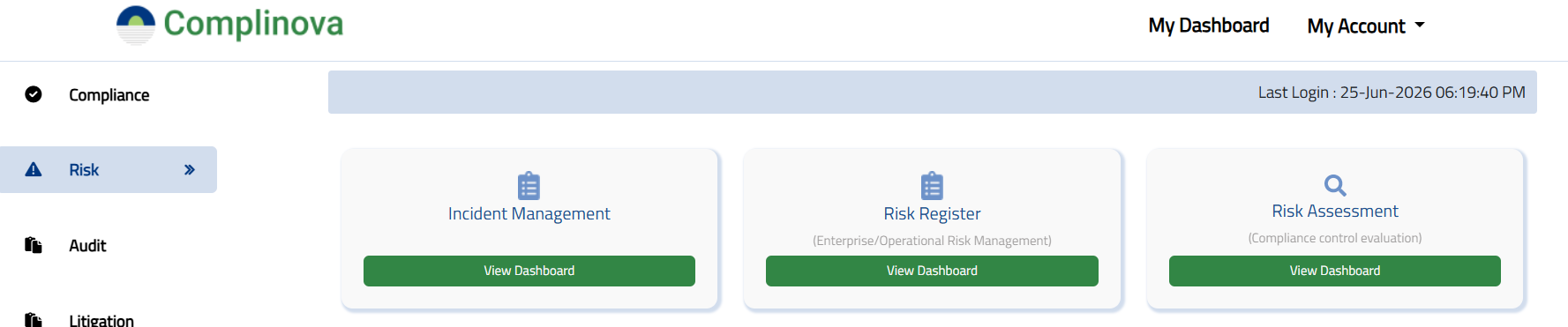
Complinova Risk Management dashboard preview

Importance of Risk Management

Businesses are exposed to different types of risks. However, nowadays, the problem is not only to identify risks but to manage them effectively.

With the increase in the number of interdependencies, organizations face the following issues with regard to their risks:

  • Low visibility into organizational risks
  • Lack of consistency in risk identification and assessment practices
  • Tardiness in implementing mitigation actions
  • No risk ownership and accountability
  • Difficulties with being prepared for any regulatory requirements
  • Higher vulnerability to various types of losses
A good Enterprise Risk Management Software can make an organization switch from reactive incident management to proactive risk management.

Why Risk Management Matters

Every business faces risks. However, the challenge is no longer identifying risks alone—it's managing them consistently across departments, processes, and locations.

As organizations grow, risks become increasingly interconnected. Regulatory changes, operational dependencies, third-party relationships, and emerging technologies create new vulnerabilities that require continuous monitoring and timely action.

Limited visibility into enterprise risks

Inconsistent risk identification and assessment processes

Delayed mitigation actions

Lack of ownership and accountability

Difficulty demonstrating compliance readiness

Increased exposure to operational and financial losses

An effective Enterprise Risk Management Software helps organizations move from reactive issue handling to proactive risk management, enabling better governance, resilience, and business continuity.

Key Benefits of Risk Management Software

Centralized Risk Information

Provide a common platform for all types of risks within the organization. Get access to live information about the state, ownership, assessment, and mitigation processes related to any risk.

Quicker Response to Risks

Detect new risks promptly and take necessary steps to address them immediately using automated workflows and notification systems.

Ensured Regulatory Compliance

Have the right documentation and audit logs of risks to prove that your organization complies with regulations.

Smart Business Decisions

Use data and analytics provided on dashboards and in reports to make smart business decisions.

Accountability

Allocate responsibilities for risk assessments, risk mitigation processes, and reviews.

Increased Resilience

Increase organizational readiness against risks by monitoring them continuously and taking steps to mitigate their impact on your business.

Risk Management Solution Process

The Risk and Compliance Management Software offers organizations the ability to manage their risks using a systematic approach.

1

Identifying Risks

Identifying all the risks from different departments, processes, assets, and compliance obligations.

2

Assessing Risks

Risk assessment is done considering impact, probability, severity, and business implications.

3

Prioritizing Risks

Prioritizing and categorising risks based on the importance of the risks.

4

Control Risks

Controlling risks by putting mitigation strategies in place and assigning roles and responsibilities.

5

Monitoring Risks

Monitoring the status of the risks, activities performed, and any new risks that arise.

6

Reporting Results

Creating reports and analytics to get insights about risk trends and mitigation effectiveness.

Key Characteristics of the Risk Management Solution

Centralized Risk Repository

Create an integrated and organized risk repository containing all risks associated with the organization in one place.

Risk Identification and Classification

Document risks systematically and classify them according to business function, department, asset or any other criteria applicable to regulation.

Risk Scoring and Prioritization

Evaluate risks based on standard evaluation criteria and prioritize actions based on their severity and impact.

Incident Management

Document, investigate and find the root cause of incidents; then undertake actions to avoid future occurrences.

Risk Assessment Frameworks

Undertake regular assessments of risks using predetermined methodology and scoring criteria and workflow processes.

Risk Registers

Document all the information about risks, their ownership, mitigations and review process in a risk register.

Corrective and Preventive Actions

Undertake necessary corrective and preventive actions in order to mitigate risks and monitor their status till closure.

Dashboards and Reports

Access dashboards and reporting capabilities to monitor risk performance and take decisions.

Notifications and Escalations

Automate notifications and escalation process to ensure timely reviews, assessments and mitigation activities.

Audit Trails and Documentation

Maintain all documentation and trails of past events.

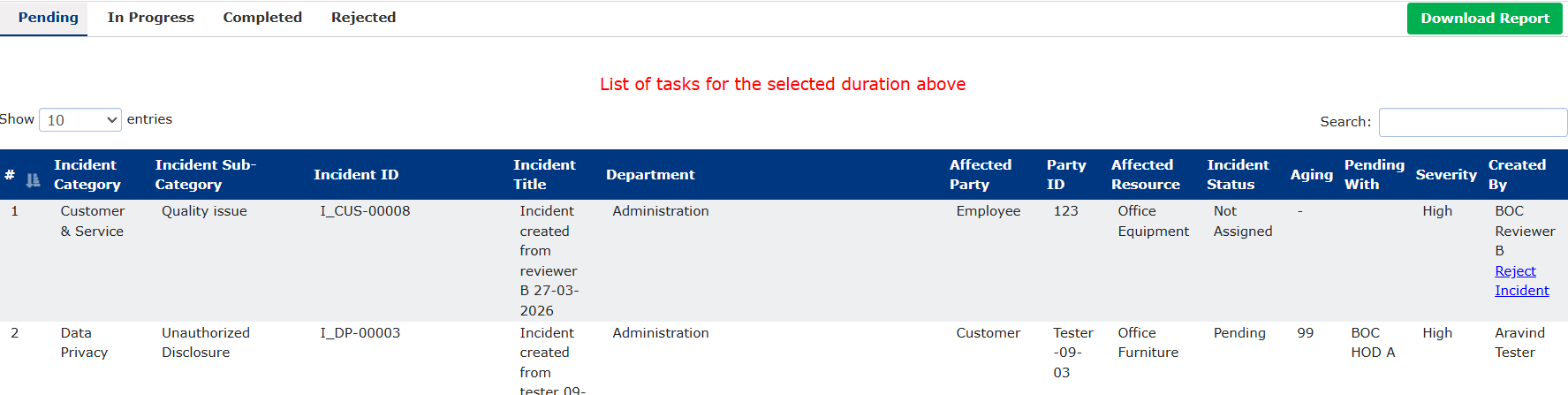
Risk management dashboard

Business Results

Operational Results

Enhance the visibility of risk at the enterprise level; enhance risk management process efficiency; minimize operational disruptions through proactive monitoring and responses.

Compliance Results

Enhance governance and compliance by keeping proper records, standardizing processes, and creating comprehensive audit trails.

Financial Results

Minimize the chance of expensive events, penalties, and business disruptions through early risk identification and mitigation.

Strategic Results

Empower management teams to make informed decisions, make strategic investments, and create an adaptable organization.

Frequently Asked Questions

Risk management software is a centralized system that helps companies in identifying, assessing, monitoring and mitigating risks.
The need for risk management software by companies is to effectively manage risks, standardize assessments, enhance reporting, and limit their operational and compliance exposures.
Yes, it can help lower operational risks since risk management software helps the company in identifying operational risks, carrying out mitigation actions and monitoring risk exposure.
Important features of enterprise risk management software include risk identification, risk assessment, risk registers, incident tracking, risk mitigation actions, dashboards, reports, notifications, and audit trails.
Risk management software assists in decision-making through real-time dashboards, analysis, and insights about the risks.
Yes, it is appropriate for large enterprises.
WhatsApp